1959 Cadillac Eldorado Biarritz: The Peak of American Chrome and Tailfin Design
September 24, 2026 · Oldygoldy
When American Cars Became Rolling Architecture
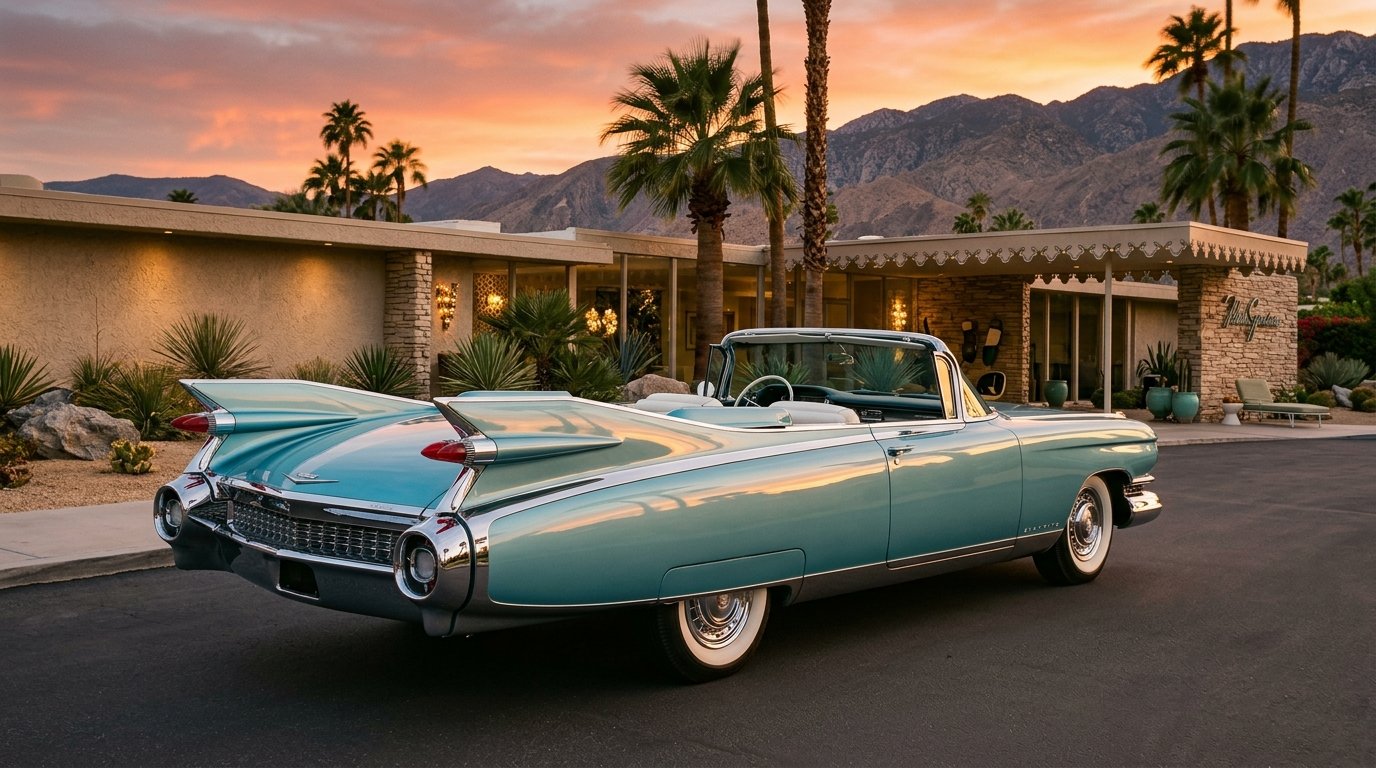
Few automobiles communicate the optimism of post-war America as dramatically as the 1959 Cadillac Eldorado Biarritz.
Everything about it was exaggerated.
The body was extremely long.
Chrome covered large areas of the exterior.
The rear tailfins rose dramatically above the body.
Twin bullet-shaped taillights made the Cadillac look almost like a machine from the future.
Today those features are instantly associated with 1950s American design.
But the Eldorado Biarritz was not simply about appearance.
It represented Cadillac’s position near the top of the American luxury-car market.
Why Were 1950s American Cars So Large?
Post-war America entered a period of economic expansion.
Suburban development increased.
Highway construction expanded rapidly.
Fuel was relatively affordable.
Cars became symbols of prosperity.
Manufacturers competed to offer more powerful engines, more equipment and increasingly dramatic styling.
Cadillac embraced this philosophy completely.
The Eldorado Biarritz represented the open-top luxury version of that vision.
The automobile was designed to attract attention.
Its proportions would be almost impossible to reproduce today without appearing intentionally theatrical.
In 1959, however, that extravagance reflected contemporary ideas about progress.
The Famous Tailfins
Tailfins appeared on many American automobiles during the 1950s.
They were partly influenced by aviation and the emerging fascination with rockets and space exploration.
Cadillac made them one of the brand’s most recognizable styling signatures.
By 1959, the design had reached its visual extreme.
The fins were enormous.
At their ends sat distinctive taillights.
Even people who know little about classic automobiles can often identify a 1959 Cadillac simply from the rear.
That immediate recognition is one reason the model remains culturally important.
Cadillac V8 Power
Under the hood was a large-displacement Cadillac V8.
The engine was designed less around sports-car behavior and more around smooth, effortless torque.
The Eldorado was a heavy luxury automobile.
It needed power that could accelerate substantial mass without requiring the engine to operate aggressively.
This created a driving experience very different from a European sports car.
Acceleration felt smooth rather than frantic.
The automatic transmission reduced driver effort.
The steering was heavily assisted.
The Cadillac was designed to make driving easy.
The Interior
The interior reinforced the sense of excess.
Wide seats provided generous space.
Chrome and decorative trim appeared across the dashboard.
Power-operated features helped distinguish expensive automobiles from ordinary models.
The Biarritz convertible also offered open-air cruising on an enormous scale.
With the roof lowered, the car became almost as much social space as transportation.
It reflected an era when American luxury meant size, comfort and visual impact.
What Is a 1959 Cadillac Like to Drive Today?
Modern drivers may be surprised by the dimensions.
Parking requires planning.
The hood stretches far ahead.
The rear body extends a significant distance behind the driver.
Steering assistance makes the wheel relatively light, but the vehicle’s mass is always noticeable.
The suspension prioritizes comfort.
Instead of the tightly controlled ride of a modern performance car, the Cadillac moves gently over road imperfections.
This floating sensation was intentional.
The objective was isolation rather than aggressive handling.
Common Ownership Challenges
The size of the car creates practical considerations.
You need enough garage space.
Some modern parking spaces are surprisingly small for a full-size 1950s Cadillac.
Chrome restoration can also become expensive because the car contains so much bright trim.
Convertible-top mechanisms require careful inspection.
Electrical accessories should be tested.
Cooling systems deserve attention because large V8 engines generate substantial heat.
Original interior components can also be expensive to reproduce correctly.
Originality Matters
Restoring a 1959 Cadillac accurately involves more than applying shiny paint.
Correct interior materials, trim, wheel covers, chrome details and engine components can all influence collector desirability.
Color combinations also matter.
These cars were offered in dramatic period colors that are part of their identity.
A historically appropriate restoration can preserve that character much more effectively than modern modifications.
Why the Eldorado Biarritz Matters
The 1959 Eldorado Biarritz captures a specific moment in American culture.
It was created before fuel crises, downsizing and modern aerodynamic efficiency changed automobile design.
The car represents an era when designers were encouraged to make vehicles larger, brighter and more dramatic.
That makes it valuable historically even beyond Cadillac enthusiasts.
It tells us what luxury meant in the United States at the end of the 1950s.
The giant fins, enormous chrome bumpers and expansive interior were physical expressions of optimism.
Few vehicles express their period so clearly.
FAQ
Why is the 1959 Cadillac famous?
The 1959 Cadillac is particularly famous for its enormous tailfins and distinctive bullet-style rear lights.
What is the Eldorado Biarritz?
The Biarritz was the convertible version of Cadillac’s prestigious Eldorado line.
Is a 1959 Cadillac difficult to own?
Its size, chrome restoration costs and complex accessories can make ownership more demanding than simpler American classics.
Why are Cadillac tailfins important?
They became symbols of 1950s American automotive styling and reflected the era’s fascination with aircraft, rockets and futuristic design.