Alfa Romeo 8C 2900B: The Pre-War Italian Supercar That Dominated Road and Track
September 16, 2026 · Oldygoldy
Alfa Romeo 8C 2900B: A Racing Car Disguised as a Grand Tourer
The Alfa Romeo 8C 2900B is one of the clearest examples of how closely road cars and racing machines were connected during the golden age of European motoring. Introduced during the second half of the 1930s, the 8C 2900 combined advanced engineering, powerful supercharged performance and some of the most beautiful coachbuilt bodies ever fitted to an automobile.
To understand the 8C 2900B, it is important to remember that Alfa Romeo was deeply involved in international motorsport. The company’s racing experience influenced virtually every major component of the car. Its chassis, engine layout, suspension and braking technology were developed in an environment where performance was not a marketing exercise but a competitive necessity.
At the heart of the car was an approximately 2.9-liter inline eight-cylinder engine. The engine used dual overhead camshafts and twin superchargers, a remarkably sophisticated configuration for a road-going automobile of the 1930s.
Depending on specification, road versions produced roughly 180 horsepower, while competition versions could develop considerably more. During an era when many ordinary automobiles struggled to produce even a fraction of that figure, the 8C 2900 offered genuinely exceptional performance.
The engine was mounted in a chassis that benefited from independent suspension. This helped give the Alfa more sophisticated road behavior than many contemporaries that still relied heavily on simpler suspension designs.
The Meaning Behind the 8C Name
The designation 8C refers to the engine’s eight cylinders. Alfa Romeo used the 8C name on a family of high-performance vehicles designed around Vittorio Jano’s celebrated straight-eight architecture.
The 2900 designation referred broadly to engine displacement.
However, simply describing the 8C 2900B by its engine specifications misses much of what makes it historically important. The car also became a platform for extraordinary Italian coachwork.
Several bodies were produced, but examples constructed by Carrozzeria Touring are particularly famous.
Touring developed its lightweight Superleggera construction philosophy around a framework of small metal tubes covered by thin aluminum body panels. This allowed designers to create flowing aerodynamic shapes while reducing unnecessary mass.
The result was an automobile that looked dramatically different from many square-bodied luxury vehicles of the early 1930s.
A Car Designed for High-Speed Europe
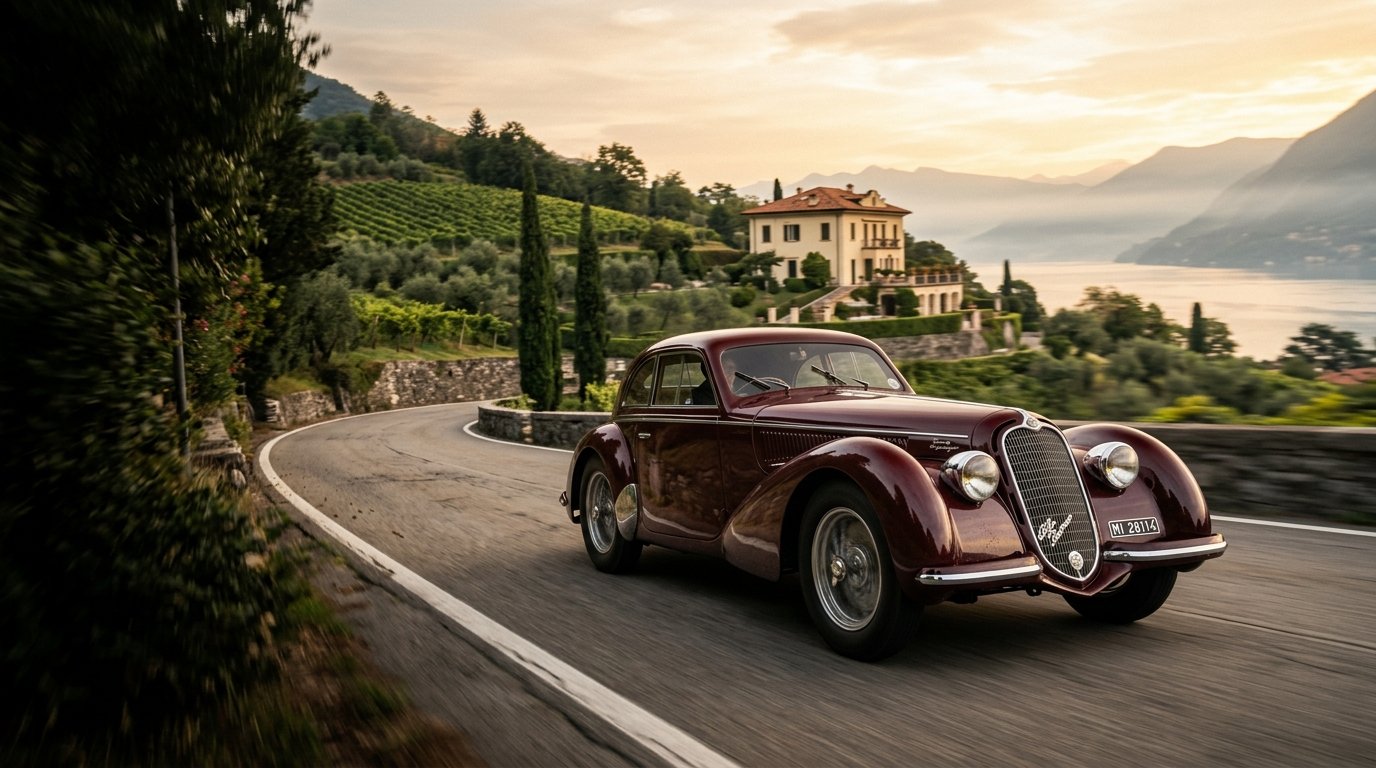
The proportions of the 8C 2900B reveal its purpose immediately.
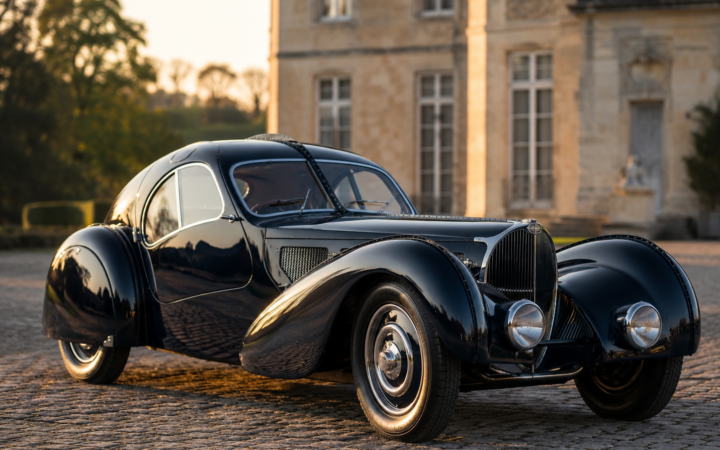
A long hood dominates the front of the vehicle. Curving fenders flow around the wheels. The cabin sits relatively far toward the rear, creating the visual impression of speed even when the car is stationary.
Those proportions were not simply decorative.
European roads and endurance races encouraged manufacturers to develop cars that remained stable at high speeds for long periods. Alfa Romeo’s racing experience meant the 8C 2900B was designed with high-speed capability as a fundamental characteristic.
Some versions were capable of speeds approaching or exceeding 100 mph, which placed the Alfa among the fastest road automobiles of its era.
The 8C 2900 and Motorsport
Competition was central to the car’s identity.
Variations of the 8C 2900 participated in major events including the Mille Miglia, one of the most demanding road races in automotive history.
The Mille Miglia crossed enormous distances through Italy on public roads. Cars needed acceleration, top speed, braking ability, endurance and reliability.
Success there gave manufacturers enormous prestige.
Alfa Romeo became closely associated with the event, and the technology developed through racing strengthened the reputation of its road cars.
The relationship between the 8C 2900 and motorsport is one reason collectors do not view it simply as an expensive pre-war luxury automobile. It represents a direct technological connection to one of racing’s most extraordinary eras.
Why the 8C 2900B Is So Rare Today
Production was extremely limited.
The automobile required expensive materials, complex engineering and significant hand labor. It was never intended to become a mass-market product.
Different chassis could also receive different bodies, meaning individual surviving cars may have unique histories and specifications.
This coachbuilt nature makes research particularly important when evaluating a specific 8C. Collectors study chassis numbers, engine numbers, body builders, competition history and ownership provenance to determine exactly what a surviving vehicle represents.
Authenticity therefore matters enormously.
Two cars that appear broadly similar may have dramatically different historical significance depending on their original configuration and competition history.
Why the Alfa Romeo 8C 2900B Still Matters
The Alfa Romeo 8C 2900B can reasonably be understood as an early ancestor of the modern supercar.
It combined an exotic engine, limited production, advanced engineering, motorsport-derived technology and extraordinary styling.
The formula sounds familiar because manufacturers still use essentially the same ingredients when creating flagship performance cars today.
Yet the 8C accomplished this during the 1930s.
It represents a moment when engineers and coachbuilders worked together with relatively few restrictions, creating automobiles that could simultaneously function as racing machines, luxury grand tourers and works of industrial art.
For enthusiasts studying the evolution of high-performance European automobiles, the Alfa Romeo 8C 2900B is therefore not merely another rare classic. It is one of the automobiles that helped define what an exotic performance car could be.
FAQ
What engine does the Alfa Romeo 8C 2900B have?
The Alfa Romeo 8C 2900B uses an approximately 2.9-liter straight-eight engine with dual overhead camshafts and twin superchargers.
Was the Alfa Romeo 8C 2900B a racing car?
The 8C 2900 family was strongly derived from Alfa Romeo’s racing technology, and competition versions participated in major events including the Mille Miglia.
Why is the Alfa Romeo 8C 2900B valuable?
Its extreme rarity, advanced engineering, racing connection, coachbuilt bodies and importance in Alfa Romeo history make surviving examples exceptionally desirable.