Classic Car Checklist: 35 Things to Inspect Before Buying a Vintage Car
September 23, 2026 · Oldygoldy
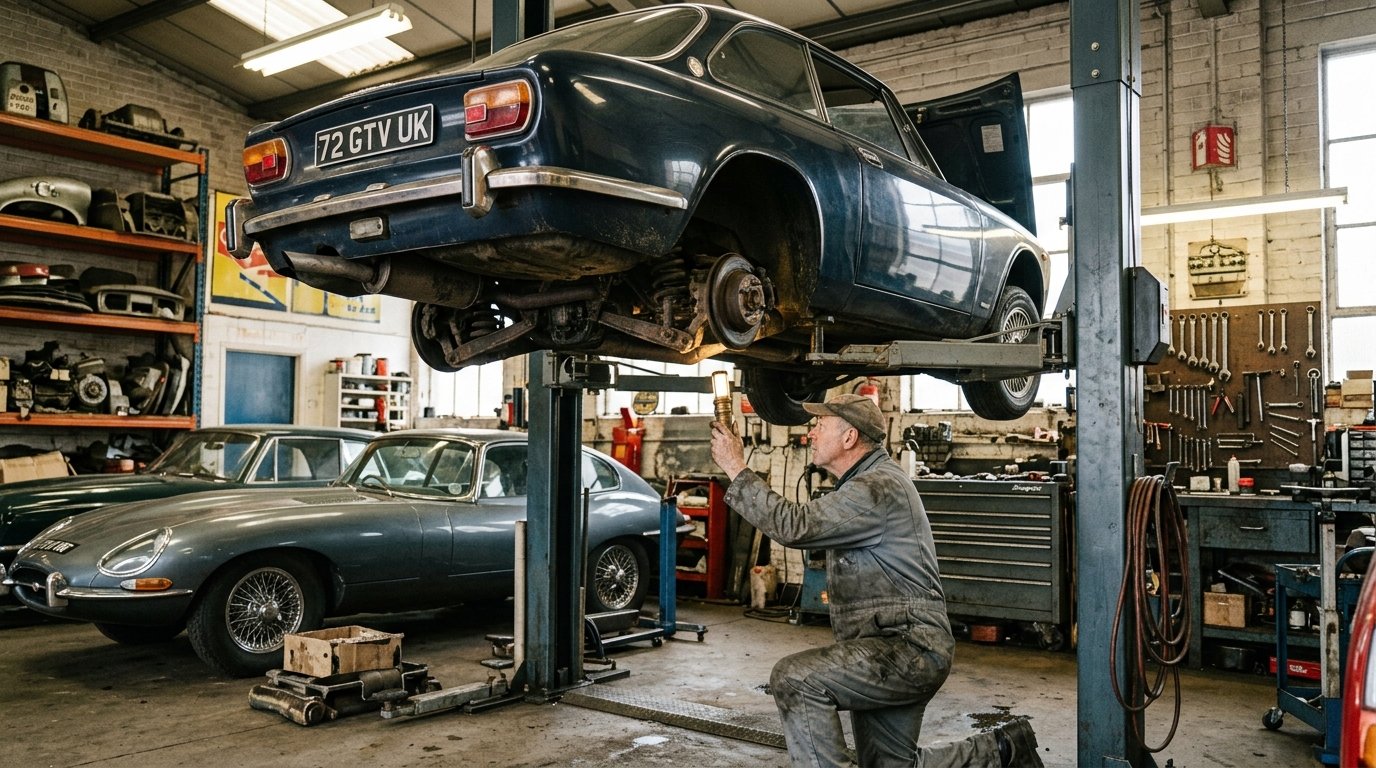
Why a Classic Car Checklist Matters
Buying a classic automobile is different from buying a nearly new used car.
Two vehicles of exactly the same model and year may have completely different values depending on rust, previous restoration work, originality, mechanical condition and documentation.
A beautiful paint finish does not necessarily mean the car is healthy underneath.
That is why every buyer should follow a structured classic car checklist before purchasing.
Start With Documentation
Before inspecting the vehicle itself, examine its paperwork.
Verify the chassis or VIN number against the documentation.
Check available service history.
Look for restoration invoices, previous ownership records, historic photographs and specialist reports.
Documentation can reveal whether the vehicle has been consistently maintained or recently assembled for resale.
For valuable collector cars, provenance can also influence market desirability.
Inspect the Body for Rust
Rust is one of the most important areas on any classic car checklist.
Look carefully underneath the automobile.
Inspect:
floor pans, sills, rocker panels, chassis rails, wheel arches, suspension mounting points, trunk floor and areas around the windshield.
Surface corrosion is very different from structural rust.
A small amount of cosmetic rust may be straightforward to repair.
Corrosion inside structural sections can require extensive cutting, welding and reconstruction.
Use a flashlight and inspect areas hidden underneath carpets or trim where possible.
Check Panel Alignment
Stand several meters away and examine the automobile from different angles.
Doors, hood and trunk should fit reasonably consistently.
Uneven gaps can indicate accident damage or poor restoration work.
Different paint texture between panels can also suggest previous repairs.
This does not automatically mean the vehicle should be rejected.
Many decades-old cars have received paintwork.
What matters is understanding what was repaired and how professionally the work was completed.
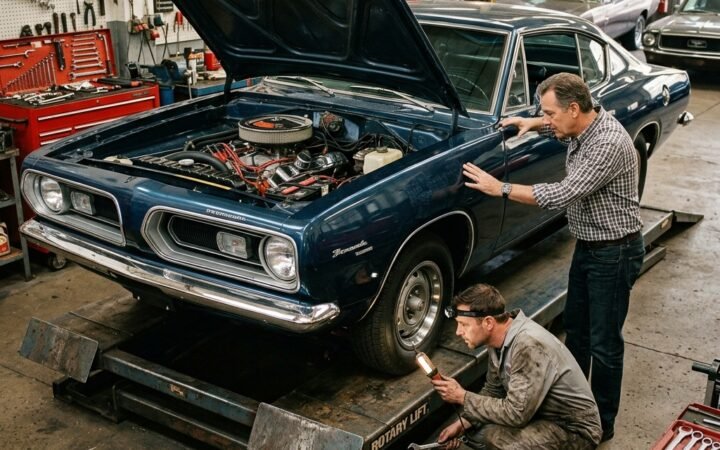
Examine the Engine Cold
Whenever possible, ask the seller not to start the engine before you arrive.
A cold start can reveal problems that disappear once the engine becomes warm.
Listen for unusual knocking, excessive valve noise or prolonged starter operation.
Watch the exhaust.
Some condensation may be normal.
Persistent blue smoke can suggest oil consumption.
Heavy white smoke after the engine is fully warm may indicate cooling-system problems.
Inspect the engine bay for leaking oil, coolant or fuel.
Check Oil and Coolant
Engine oil should not contain obvious metallic particles.
Coolant should appear appropriate rather than heavily contaminated by rust.
Look underneath the oil filler cap.
Small amounts of condensation can occur, particularly if the vehicle is used only for short journeys, but heavy creamy deposits may require further investigation.
Check hoses for cracking and inspect belts for deterioration.
Classic cars often suffer from age-related rubber failure even when mileage is low.
Inspect the Transmission
During the test drive, shift through every gear.
Listen for grinding or excessive gearbox noise.
A manual gearbox should not jump out of gear unexpectedly.
Clutch operation should be reasonably progressive.
A slipping clutch may become obvious under acceleration in a higher gear.
Automatic classics should engage drive without excessive delay or violent movement.
Test the Brakes
Classic brakes rarely feel like modern systems, so understand the expected behavior of the particular model.
However, the vehicle should brake consistently without pulling strongly to one side.
A soft pedal can indicate hydraulic problems.
Old brake hoses, wheel cylinders and master cylinders may deteriorate internally even when external appearance seems acceptable.
Steering and Suspension
Excessive steering play can come from worn joints, steering boxes or suspension components.
Listen for clunks when passing over uneven surfaces.
Check the tires for unusual wear patterns.
Uneven tire wear can indicate poor alignment or worn suspension parts.
Inspect the Interior
Original interiors can add character and value, particularly on collectible cars.
Look underneath carpets for moisture or corrosion.
Inspect seat frames, dashboard components, instruments and switches.
Replacing interior trim on a rare model can become surprisingly expensive.
Check whether gauges operate normally during the test drive.
Electrical System
Test everything.
Headlights, indicators, brake lights, wipers, heater fan, horn and interior lights should all be checked.
Electrical problems are common on older vehicles.
Individually they may appear minor, but decades of poorly executed wiring modifications can create significant reliability problems.
Check the Tires Carefully
Old classic cars often cover very little annual mileage.
As a result, tires can look excellent while actually being many years old.
Check the date codes.
Rubber deteriorates with time, not only mileage.
Replacing old tires should be considered a safety priority.
Verify Originality
If originality matters to you, research the specific model before viewing it.
Learn what engine, gearbox, wheels, interior trim and exterior details should be present.
A modified car is not automatically undesirable.
However, modifications can influence collectability.
Make sure the price reflects the actual specification.
Get a Professional Inspection
For an expensive classic, a pre-purchase inspection by a specialist is one of the smartest investments you can make.
A mechanic familiar with that particular marque may identify issues invisible to a general mechanic.
The inspection cost can potentially prevent a much larger financial mistake.
Final Buying Rule
Never allow excitement to replace inspection.
There will almost always be another classic car for sale.
Walking away from a questionable vehicle can save thousands in restoration expenses.
A good classic car checklist gives you the discipline to evaluate the machine rather than simply falling in love with its appearance.
FAQ
What should I check before buying a classic car?
Inspect documentation, rust, chassis condition, engine, transmission, brakes, suspension, electrical equipment, interior and originality.
What is the biggest problem to look for on an old car?
Structural corrosion is one of the most serious issues because repairs can involve extensive metalwork.
Should I get a classic car inspected professionally?
Yes, particularly for expensive or rare vehicles.