How to Buy a Classic American Muscle Car Without Making an Expensive Mistake
September 24, 2026 · Oldygoldy
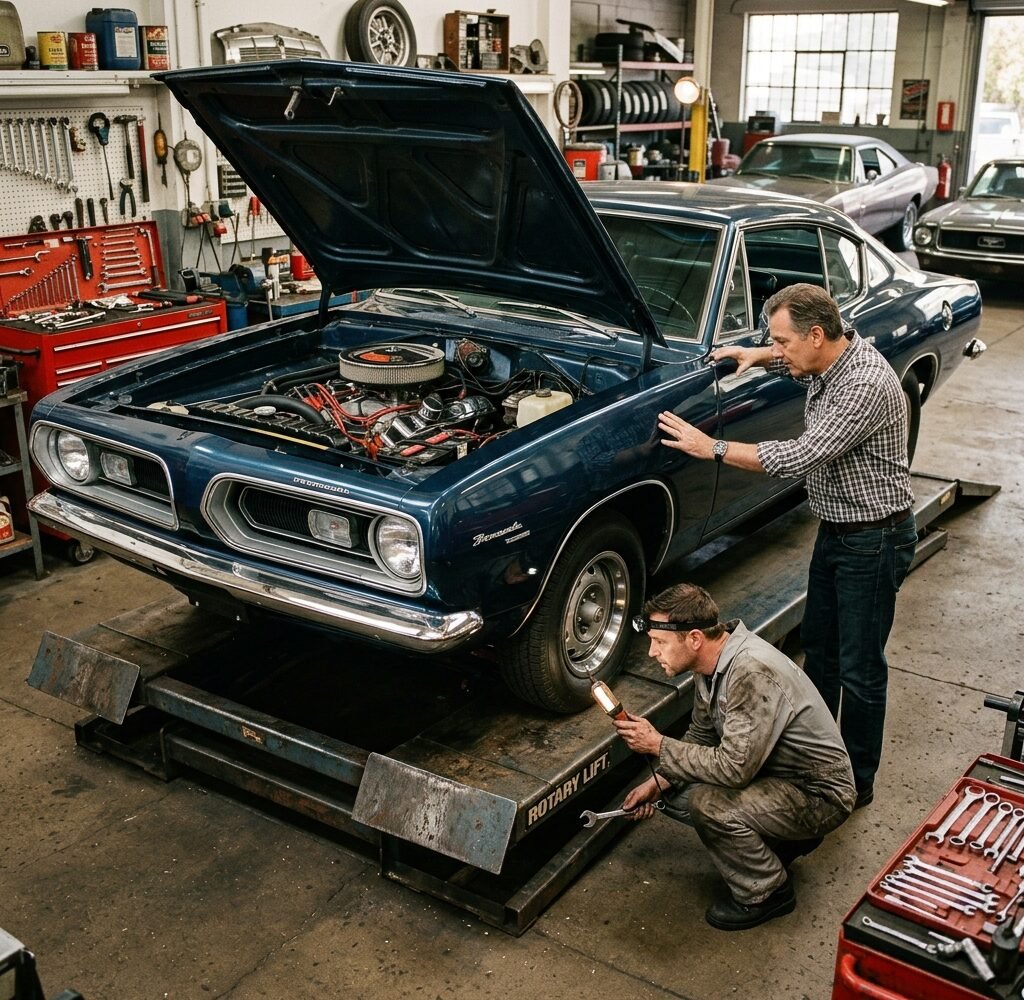
Buying a Muscle Car Requires More Than Checking Horsepower
A classic American muscle car can be one of the most enjoyable vehicles to own.
Big V8 engines, distinctive styling and relatively simple mechanical systems make cars from the muscle-car era enormously appealing.
But buying one without proper research can become expensive very quickly.
The most important rule is simple:
Buy the condition and documentation, not just the badge on the fender.
A beautifully restored car can hide serious structural repairs.
A genuine high-performance model may have lost its original engine.
A relatively inexpensive project can consume more money than buying a properly restored vehicle from the beginning.
Decide What Kind of Muscle Car You Want
Before shopping, decide what matters most.
Do you want originality?
Performance?
Weekend usability?
Investment potential?
A restoration project?
These goals lead toward very different cars.
Someone who wants a reliable weekend cruiser may be happier with a mildly modified Mustang or Chevelle.
A collector seeking long-term authenticity may prefer a documented original example with factory-correct components.
Neither choice is wrong.
Problems occur when buyers pay collector-level prices for modified or incorrectly represented cars.
Research the Exact Model
Muscle cars often have complicated option structures.
Two cars that look nearly identical can have dramatically different values.
Engine size matters.
Transmission matters.
Factory performance packages matter.
Production year matters.
Rare options can influence value.
Before viewing a car, learn the model’s identification codes.
Depending on the manufacturer, this may include VIN information, trim tags, engine stampings, casting numbers and build sheets.
Beware of Clones
Because high-performance models are valuable, replicas and clones exist.
A standard vehicle can sometimes be modified to look like a rare performance version.
Badges are easy to replace.
Hoods can be changed.
Wheels can be installed.
Engines can be upgraded.
This does not make the car bad.
A well-built clone can be an excellent vehicle.
The issue is price.
A clone should not be represented as an original factory high-performance model.
Documentation becomes extremely important.
Rust Is Often More Important Than the Engine
Engines are expensive to rebuild.
But severe body corrosion can be even more expensive.
Inspect the floor pans.
Check rocker panels.
Examine trunk floors.
Look around rear windows.
Inspect frame rails and suspension mounting points.
Check the lower areas of doors and fenders.
Different models have different rust-prone areas.
Research them before viewing the car.
Look for Hidden Body Filler
A shiny paint job can hide poor repairs.
Inspect reflections along the body.
Uneven surfaces may reveal previous bodywork.
Panel gaps can indicate collision repairs.
A paint-depth gauge can sometimes help, although interpretation on older restorations requires experience.
Professional inspection is worthwhile when buying an expensive car.
Matching Numbers
The phrase matching numbers appears constantly in muscle-car advertisements.
It generally refers to important original mechanical components remaining associated with the car.
But sellers sometimes use the phrase loosely.
Ask exactly what matches.
Engine?
Transmission?
Rear axle?
Body numbers?
Documentation?
Do not rely on vague descriptions.
For highly collectible models, specialist verification may be necessary.
Engine Condition
Start the engine from cold whenever possible.
Listen for unusual knocking.
Check oil pressure.
Watch the exhaust.
Blue smoke may indicate oil burning.
Check for cooling-system problems.
Inspect for oil and coolant leaks.
A modified engine is not necessarily a disadvantage.
But modifications should be professionally executed.
Poorly installed aftermarket components can create reliability problems.
Transmission and Differential
Test every gear.
Automatic transmissions should shift consistently.
Manual transmissions should not grind excessively or jump out of gear.
Listen for rear differential noise.
High-performance muscle cars can experience hard use.
Burnouts, drag racing and aggressive launches place significant loads on driveline components.
Do not assume low mileage automatically means gentle treatment.
Brakes and Suspension
Original muscle cars may have braking performance far below modern expectations.
Some vehicles left the factory with drum brakes.
Others used front discs.
Upgraded braking systems can make a classic much easier to use regularly.
Inspect bushings, ball joints, shocks, steering components and wheel bearings.
Excessive steering play can significantly affect the driving experience.
Modified Versus Original
There is no universal answer.
Original cars may have greater collector significance.
Modified cars may be faster and easier to drive.
A common approach is reversible modification.
Owners install improved brakes, electronic ignition or modern tires while retaining original components.
This allows the car to become more usable without permanently eliminating its historical specification.
Check the Documentation
Good documentation can include:
factory build information, previous titles, restoration photographs, service invoices and ownership history.
A thick file of records provides confidence.
It also helps future owners understand exactly what has been repaired or replaced.
Calculate the Real Purchase Price
The advertised price is not the real cost.
Add expected expenses.
Tires.
Fluids.
Brakes.
Insurance.
Transport.
Registration.
Immediate repairs.
Garage preparation.
A cheaper car requiring extensive work may ultimately cost more than a better example.
Get a Pre-Purchase Inspection
For a valuable muscle car, hire someone who understands that particular model.
A general mechanic can inspect basic mechanical condition.
A marque specialist may notice incorrect components, reproduction trim or identification issues that a general mechanic would miss.
The inspection can save far more than it costs.
The Best Muscle Car Is Not Always the Rarest
You do not need a six-figure collector car to enjoy American muscle.
A more common model with excellent mechanical condition may provide a better ownership experience.
Parts availability may also be better.
Insurance can be easier.
You may feel more comfortable driving it regularly.
Ultimately, the best choice is the car that matches your goals and budget.
FAQ
What should I check when buying a classic muscle car?
Inspect rust, body repairs, engine condition, transmission, brakes, suspension, identification numbers and documentation.
Are matching numbers important on muscle cars?
They can significantly affect collector value on rare vehicles, but importance depends on the model and buyer’s goals.
Should I buy an original or modified muscle car?
Original cars may offer stronger collector appeal, while properly modified cars can provide better everyday performance and usability.
What is the biggest risk when buying an old muscle car?
Structural rust, poorly documented restoration work and cars falsely represented as rare factory performance models are major risks.