Duesenberg Model J: When America Built the World’s Most Powerful Luxury Car
September 15, 2026 · Oldygoldy
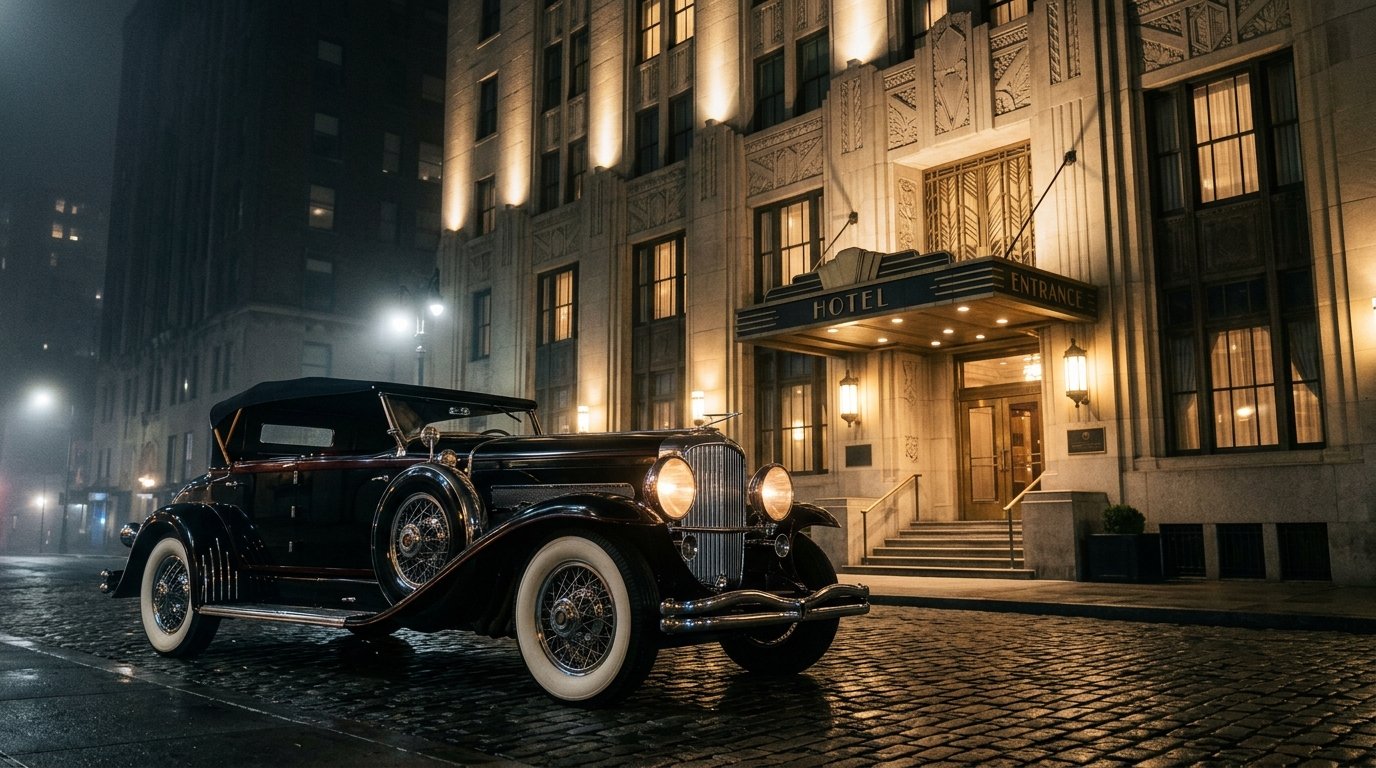
When the Duesenberg Model J appeared at the end of the 1920s, America was not merely trying to compete with Europe’s finest luxury automobiles. Duesenberg intended to outperform them.
At the center of the Model J was its enormous 420-cubic-inch, or roughly 6.9-liter, straight-eight engine. With dual overhead camshafts and four valves per cylinder, the naturally aspirated engine was rated at approximately 265 horsepower—an extraordinary figure for the period.
The later supercharged SJ raised output even further.
Yet Duesenberg’s significance came from more than its engine. Customers typically purchased the sophisticated chassis and then selected custom coachwork from firms such as Murphy, Derham, LeBaron or Rollston.
That meant a Model J could become a formal limousine, disappearing-top convertible, sporty roadster or extravagant touring car depending on its owner’s taste.
Why did the Model J become an American icon?
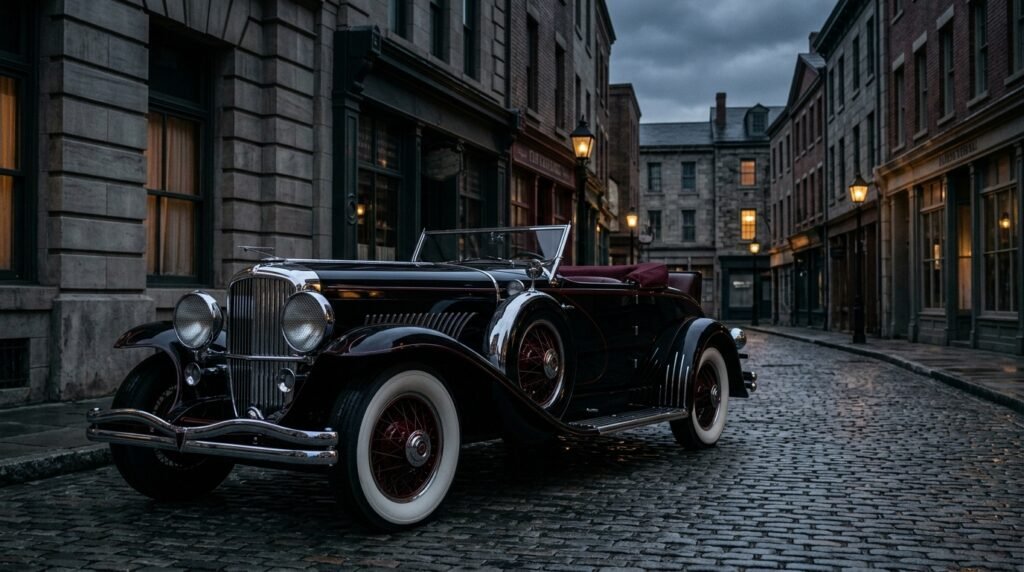
It represented the extraordinary wealth and ambition of the late 1920s and early 1930s. Its engineering was advanced, its dimensions were imposing and its bodies were frequently unique.
The Model J demonstrated that the United States could produce a car capable of standing beside Rolls-Royce, Hispano-Suiza and the finest European marques while developing its own unmistakably American interpretation of luxury.