How to Store a Classic Car Long Term Without Damaging It
September 24, 2026 · Oldygoldy
Proper Storage Is More Than Parking the Car
Knowing how to store a classic car long term is essential for preserving both mechanical condition and cosmetic value.
Simply parking the vehicle in a garage and covering it for six months can create unexpected problems.
Batteries discharge.
Tires develop flat spots.
Fuel deteriorates.
Moisture encourages corrosion.
Rodents can damage wiring and upholstery.
A proper storage process reduces these risks.
Clean the Car Before Storage
Never intentionally store a dirty classic for months.
Road grime can contain moisture and contaminants.
Clean the bodywork thoroughly and dry it completely.
Pay attention to wheel arches and the underside.
Vacuum the interior.
Remove food, paper or anything that may attract insects or rodents.
Make sure carpets are dry before closing the vehicle.
Choose the Right Garage
Keeping a classic car in a garage is usually preferable to outdoor storage.
However, the garage itself must be reasonably dry and ventilated.
A humid garage can still cause corrosion.
Extreme temperature fluctuations can create condensation.
A climate-controlled facility is ideal for highly valuable collector cars, but even a normal garage can work well if moisture is managed correctly.
Avoid covering a damp car.
Fuel Preparation
Fuel strategy depends partly on storage duration and fuel system type.
For many classic vehicles, owners use fresh fuel and appropriate stabilizer before storage.
The vehicle is then operated long enough to circulate treated fuel through the system.
Extremely long storage may require a different approach.
Follow recommendations appropriate to the vehicle rather than applying one method universally.
Change Contaminated Oil
Used engine oil contains combustion byproducts.
If the car is approaching an oil change, replacing the oil before long-term storage can be sensible.
Fresh oil reduces the amount of contamination sitting inside the engine.
Protect the Battery
Batteries naturally lose charge while unused.
Disconnecting the battery reduces parasitic drain.
A suitable intelligent battery maintainer can keep it charged during storage.
Avoid using an unsuitable charger continuously.
It should be compatible with the battery technology and electrical system.
Tire Protection
Check and adjust tire pressures before storage.
Long periods in one position may create temporary or permanent flat spotting.
For expensive collector vehicles stored for many months, owners may use specialist tire supports.
Occasionally moving the vehicle slightly can also change the contact point.
Do Not Use the Parking Brake for Very Long Storage
On some classic cars, leaving the parking brake engaged for months may cause components to stick.
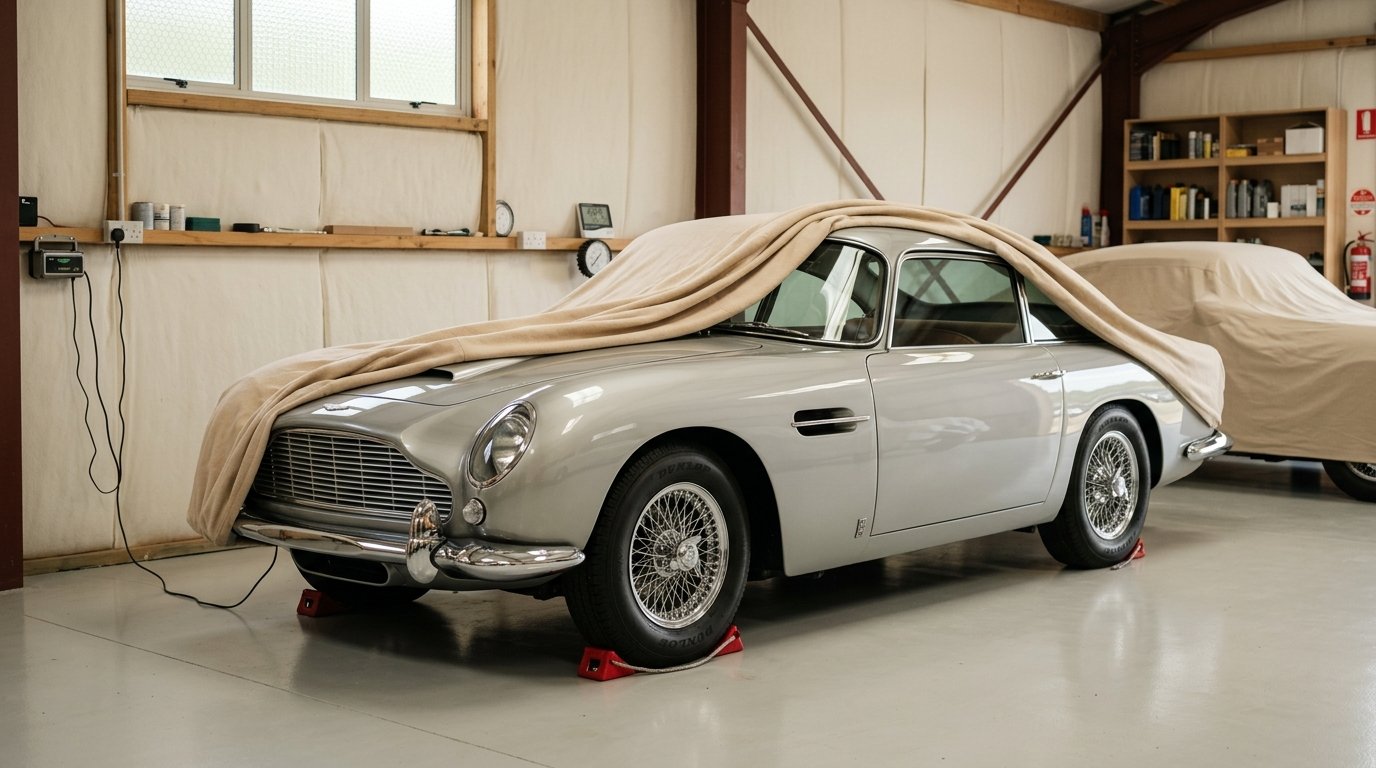
If the storage environment is secure and level, wheel chocks may be preferable.
Exact procedures depend on the vehicle.
Protect the Interior
Leather benefits from a clean, stable environment.
Extreme dryness can cause deterioration while excessive humidity encourages mold.
Avoid leaving the cabin sealed with moisture trapped inside.
Breathable moisture-control products may be useful depending on climate.
Use the Correct Car Cover
A breathable indoor car cover protects against dust while allowing moisture to escape.
Cheap waterproof plastic covers can sometimes trap condensation against the body.
Make sure the vehicle is completely dry before covering it.
Do Not Start the Engine for Five Minutes
One common mistake is periodically starting a stored classic and letting it idle briefly.
Short operation may create condensation without allowing the engine and exhaust to reach full operating temperature.
If practical, driving the vehicle properly is usually more useful than a brief idle.
For vehicles that must remain in static storage, follow an appropriate preservation procedure instead.
Check the Car During Storage
Long-term storage should not mean ignoring the car.
Periodically check for:
fluid leaks, tire pressure loss, battery problems, rodents, humidity and unusual odors.
Finding a problem after two weeks is better than discovering it after one year.
Returning the Car to the Road
Before driving after extended storage, inspect everything.
Check fluids.
Inspect tires.
Test brakes carefully.
Look for leaks.
Verify battery condition.
Examine fuel hoses.
Allow the engine to build oil pressure appropriately.
The first drive should be gentle.
Why Correct Storage Preserves Value
Classic cars often deteriorate while parked rather than while being driven.
Poorly ventilated buildings encourage rust.
Old fuel damages components.
Batteries leak.
Rodents destroy wiring.
Correct storage therefore protects both mechanical health and collector value.
FAQ
How should you store a classic car long term?
Store it clean and dry in a suitable garage, prepare the fuel and battery, protect the tires and regularly inspect the vehicle.
Should a classic car be covered in a garage?
A breathable indoor cover can protect against dust, but the vehicle should be completely dry before covering.
Should you start a stored classic every week?
Brief idling is generally less useful than properly driving the vehicle to full operating temperature.