Mercedes-Benz 300 SL Gullwing: The Racing Technology Behind the World’s Most Famous Doors
September 18, 2026 · Oldygoldy
The Car That Made Gullwing Doors Famous
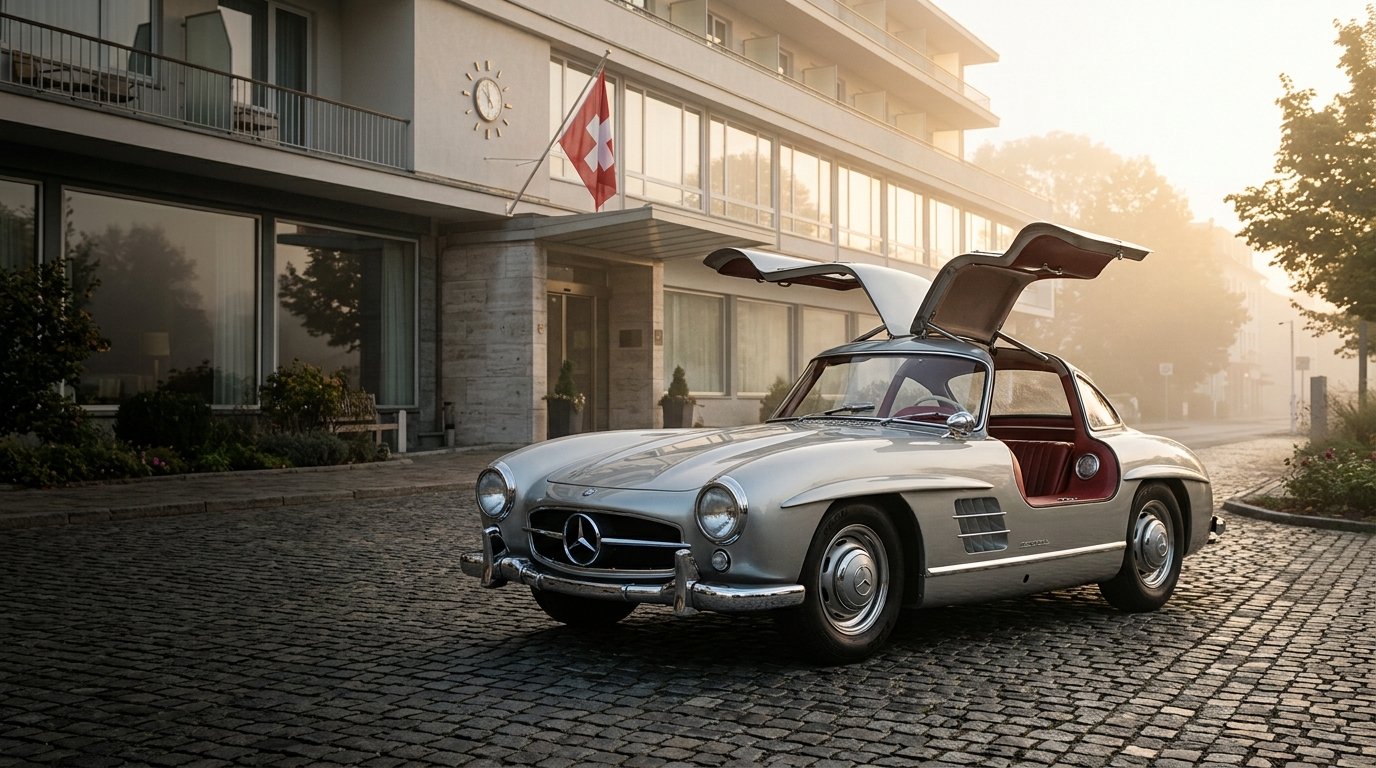
Few classic automobiles can be recognized as quickly as the Mercedes-Benz 300 SL Gullwing.
Raise its doors and the identity becomes unmistakable.
Yet the famous doors were not originally created simply as a styling experiment. They were a consequence of the car’s unusual racing-derived chassis.
The production 300 SL Coupé appeared during the mid-1950s and was closely related conceptually to Mercedes-Benz competition cars.
Its internal designation was W198, while the earlier racing machine was known as the W194.
The letters SL are traditionally associated with the idea of a lightweight sporting automobile.
Whatever detail attracts someone first—the doors, the styling or the Mercedes badge—the engineering beneath the body is what transformed the 300 SL into an automotive landmark.
Why Did the 300 SL Need Gullwing Doors?
The racing-derived tubular spaceframe was designed to provide significant structural strength while keeping weight relatively low.
However, sections of the frame rose high along the sides of the passenger compartment.
Traditional doors extending deeply into the body would have interfered with this structure.
Mercedes engineers therefore created doors hinged at the roof.
When opened, they resembled the wings of a bird.
The solution became one of the most famous design features in automotive history.
This is an important distinction: the Gullwing doors were fundamentally influenced by engineering requirements before becoming a styling icon.
The 3.0-Liter Straight-Six Engine
Under the long hood was a 3.0-liter inline six-cylinder engine.
One of its most important technologies was mechanical direct fuel injection.
Fuel injection offered important advantages over traditional carburetors and helped the road-going 300 SL develop roughly 215 horsepower in commonly quoted specification.
That output was exceptional during the 1950s.
Depending on gearing and configuration, the 300 SL could reach extremely high speeds for a production automobile of its period.
This made the car far more than a fashionable luxury coupé.
It was a genuine high-performance machine.
Racing DNA
The road car’s story cannot be separated from Mercedes-Benz motorsport.
The earlier W194 competition cars demonstrated the effectiveness of lightweight construction and aerodynamic efficiency.
Mercedes participated successfully in demanding international events.
The production automobile translated much of that reputation into a road-going package that wealthy customers could actually purchase.
American importer Max Hoffman played an important role in encouraging Mercedes-Benz to produce a customer version for the market.
The United States became especially important to the 300 SL story as affluent enthusiasts wanted European sports cars offering both speed and prestige.
The Design
The 300 SL’s shape remains elegant because its major features serve clear functions.
The long hood accommodates the straight-six engine.
The roof curves tightly over the passenger compartment.
The rear body tapers smoothly.
Distinctive horizontal elements above the wheel openings became recognizable visual signatures.
Unlike many later supercars, the 300 SL does not require enormous wings or aggressive aerodynamic devices to appear fast.
Its proportions communicate performance naturally.
What Was the 300 SL Like to Drive?
The 300 SL offered extraordinary speed, but it also demanded respect.
Its suspension layout could create challenging handling behavior near the limit.
Drivers accustomed to modern stability-control systems would find the car far more demanding.
The steering, brakes and gearbox also require deliberate mechanical inputs.
Inside, entering and exiting the car involves climbing over the high side structures created by the spaceframe.
Owners often tilt or move the steering wheel to make entry easier.
This means that even one of the car’s inconveniences directly reminds the driver of its racing-derived construction.
Gullwing Coupé Versus Roadster
Mercedes later introduced the 300 SL Roadster.
The open car used structural revisions that made conventional doors possible and offered improvements aimed at making the car easier to use.
Although both versions share the 300 SL identity, collectors often discuss the Gullwing separately because of its distinctive design and historical impact.
The Coupé’s roof-hinged doors became so famous that “Gullwing” effectively became part of the model’s name in popular culture.
Why the 300 SL Remains Important
The Mercedes-Benz 300 SL represents a combination that automotive manufacturers still pursue today: transferring motorsport technology into an exclusive road car.
Its direct fuel injection, lightweight spaceframe construction, aerodynamic styling and extraordinary performance made it technologically advanced for the 1950s.
But engineering alone does not explain its enduring fame.
The automobile also possesses an instantly recognizable visual identity.
This combination of technical innovation and dramatic design explains why the 300 SL continues to appear in museums, major concours events and significant classic-car collections around the world.
More than seventy years after its introduction, the Gullwing remains a perfect example of how an engineering solution can accidentally become one of the greatest design icons in automotive history.
FAQ
Why does the Mercedes 300 SL have Gullwing doors?
The roof-hinged doors were largely a consequence of the high side sections of the lightweight tubular spaceframe, which made conventional deep doors difficult to use.
What engine is in the 300 SL Gullwing?
The Mercedes-Benz 300 SL uses a 3.0-liter inline six-cylinder engine with mechanical direct fuel injection.
How much horsepower did the 300 SL produce?
Common road specification is generally quoted at approximately 215 horsepower.
Was the 300 SL based on a race car?
Yes. Its engineering was closely connected to Mercedes-Benz’s W194 competition program.