Delahaye 135 MS: The French Luxury Sports Car That Defined Art Deco Motoring
September 17, 2026 · Oldygoldy
When French Coachbuilding Became Automotive Art
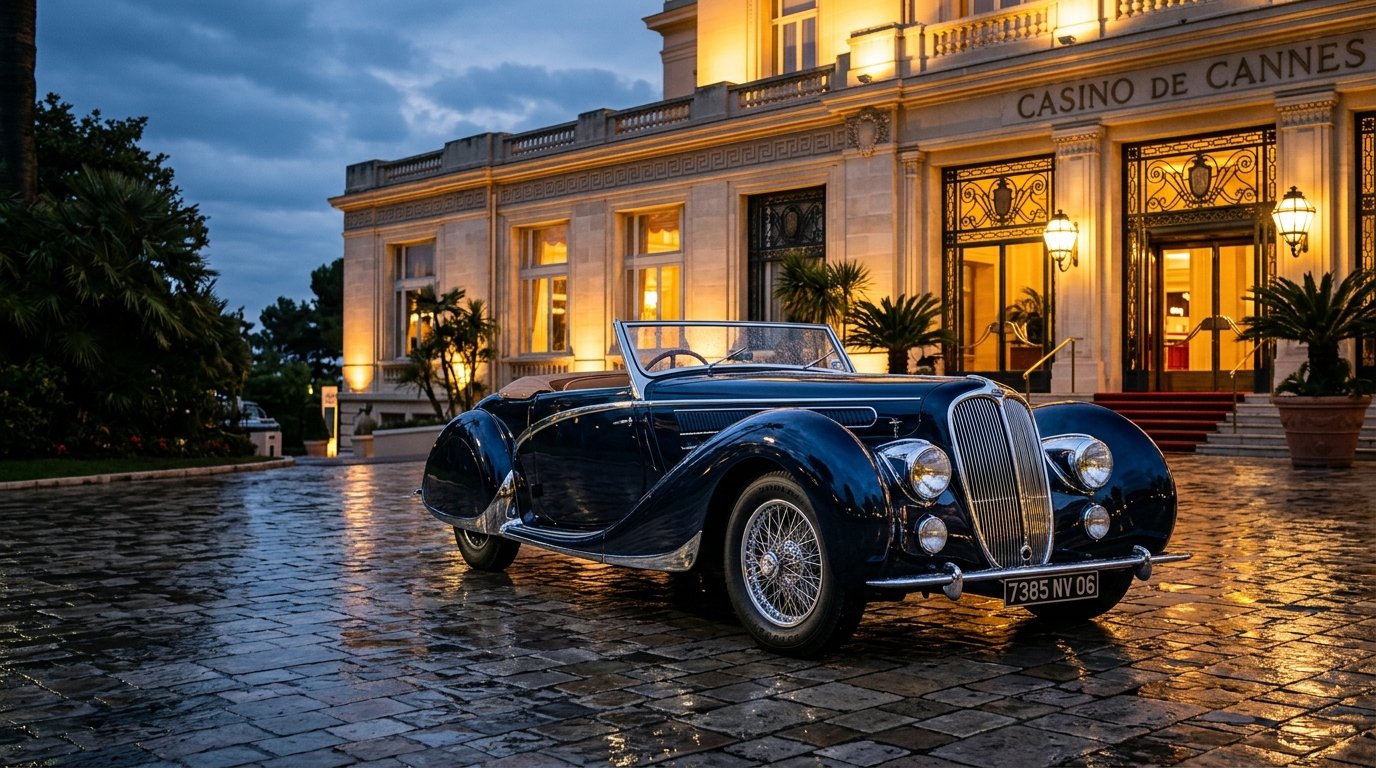
The Delahaye 135 occupies a special place in classic-car history because it successfully combined three very different qualities: luxury, sporting performance and extravagant French coachbuilding.
Introduced during the 1930s, the Delahaye 135 became the foundation for a remarkable collection of automobiles. Although the mechanical chassis came from Delahaye, the finished appearance could differ dramatically depending on which coachbuilder created the body.
Companies including Figoni et Falaschi, Chapron, Saoutchik and Letourneur et Marchand transformed Delahaye chassis into elegant roadsters, cabriolets, coupés and competition cars.
The more sporting 135 MS became particularly desirable.
MS is generally associated with the higher-performance specification of the model, featuring an approximately 3.6-liter inline-six engine.
Depending on configuration and period, output varied, but the 135 MS offered significantly stronger performance than ordinary luxury cars.
A Different Approach to Performance
Unlike some high-performance automobiles that focused almost entirely on horsepower, the Delahaye philosophy was more balanced.
The company wanted a car capable of long-distance travel, racing competition and sophisticated road use.
The chassis was robust and adaptable enough for both racing and luxurious coachbuilt bodies.
This versatility explains why Delahaye 135s can look dramatically different from one another.
A streamlined Figoni et Falaschi roadster can appear almost unrelated to a formal Chapron convertible, even though both may share closely related mechanical foundations.
That diversity is one of the reasons Delahaye remains fascinating to collectors.
The Importance of French Coachbuilding
During the 1930s, buying an expensive automobile often involved two separate stages.
A customer could purchase a chassis from the manufacturer and then commission a specialist coachbuilder to create the body.
This system allowed wealthy clients to own cars designed according to personal preferences.
French coachbuilders became particularly famous for dramatic Art Deco styling.
Flowing fenders, disappearing running boards, curved windscreens, low rooflines and dramatically tapered rear sections became signatures of the era.
Few mechanical platforms displayed those ideas as beautifully as the Delahaye 135.
Figoni et Falaschi bodies in particular often used sweeping shapes that made automobiles resemble sculptures in motion.
Racing Was Part of the Delahaye Story
Despite their elegant appearance, Delahaye automobiles were not merely boulevard cruisers.
Competition versions successfully participated in major European motorsport events.
The company earned victories and strong results in endurance competition, demonstrating that the 135 chassis possessed genuine sporting capability.
That racing credibility distinguished the Delahaye from automobiles created purely as luxury transportation.
Owners could enjoy elaborate handcrafted interiors and dramatic coachwork while knowing that the underlying engineering had been tested in demanding competition.
This relationship between elegance and performance remains central to the model’s appeal today.
What Was the Delahaye 135 MS Like to Drive?
Compared with modern cars, almost every aspect of driving a 135 MS requires more involvement.
Steering is heavy at low speed. Braking requires greater anticipation. The gearbox requires deliberate technique, and drivers must understand the mechanical character of the automobile.
However, once moving, the experience becomes far more graceful.
The long wheelbase provides stability, while the six-cylinder engine delivers smooth torque.
Rather than aggressive acceleration alone, the Delahaye offers the sensation of building speed progressively while the long hood stretches ahead of the driver.
That experience represents a very different philosophy from modern performance vehicles.
Why Surviving Examples Are So Different
Collectors researching a Delahaye must look beyond the model name.
The coachbuilder, body style, chassis history, restoration quality and originality can completely change the significance of a particular car.
Some automobiles retain their original bodies.
Others were rebodied decades later.
Competition history can also substantially influence historical importance.
Because these vehicles were often individually commissioned, provenance becomes almost as important as technical specifications.
A fully documented automobile with historically important coachwork can represent an extraordinary surviving artifact from the golden age of French luxury.
Why the Delahaye 135 MS Matters Today
The Delahaye 135 MS tells a story that modern mass production rarely can.
It came from a world where automobile manufacturers, specialist coachbuilders, engineers and individual clients all participated in creating the final vehicle.
It also demonstrates that luxury and motorsport were not necessarily separate categories.
A beautiful roadster could possess genuine racing engineering.
A competition chassis could become an elegant grand tourer.
For enthusiasts interested in Art Deco, European motorsport or handcrafted automobiles, the Delahaye 135 MS stands among the most important French cars ever created.
FAQ
What engine did the Delahaye 135 MS use?
The Delahaye 135 MS typically used an approximately 3.6-liter inline six-cylinder engine.
Who built Delahaye 135 bodies?
Important coachbuilders included Figoni et Falaschi, Chapron, Saoutchik and Letourneur et Marchand.
Was the Delahaye 135 used in racing?
Yes. Competition versions of the Delahaye 135 participated successfully in important European endurance races.