Ferrari 250 GT SWB: Why the Short-Wheelbase Ferrari Became a Collector Legend
September 17, 2026 · Oldygoldy
One of Ferrari’s Most Important Grand Touring Cars
The Ferrari 250 GT Short Wheelbase, commonly called the 250 GT SWB, belongs to a period when Ferrari road cars and competition cars were often separated by surprisingly little.
Introduced around 1959, the SWB combined compact proportions, elegant bodywork and Ferrari’s celebrated V12 engine.
The abbreviation SWB means Short Wheelbase.
Ferrari reduced the wheelbase compared with earlier 250 GT models, creating a car that felt more agile and visually more muscular.
Its compact dimensions also made it exceptionally effective in competition.
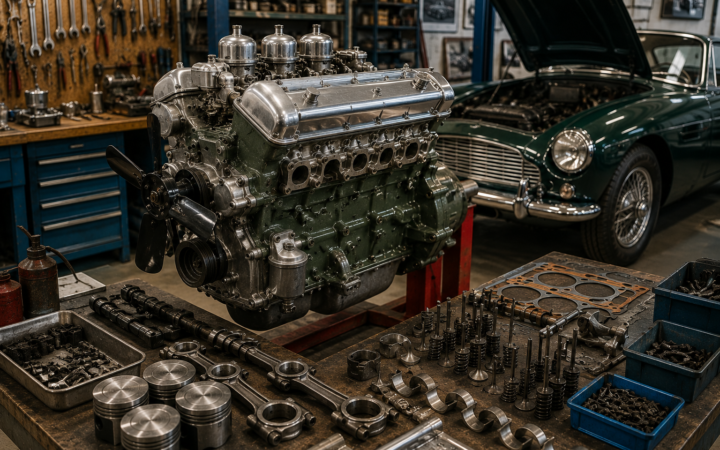
At the front sat a version of Ferrari’s famous Colombo-designed V12.
Displacement was approximately 3.0 liters.
Depending on road or competition specification, power could vary significantly, with racing cars receiving higher-output engines.
The V12’s ability to produce smooth power at high engine speeds became a defining characteristic of classic Ferrari automobiles.
Why the Shorter Wheelbase Mattered
Wheelbase has a major influence on vehicle behavior.
A shorter distance between the front and rear axles can help a car change direction more quickly.
For Ferrari, this gave the SWB an advantage on demanding roads and race circuits.
The shorter chassis also changed the proportions of the body.
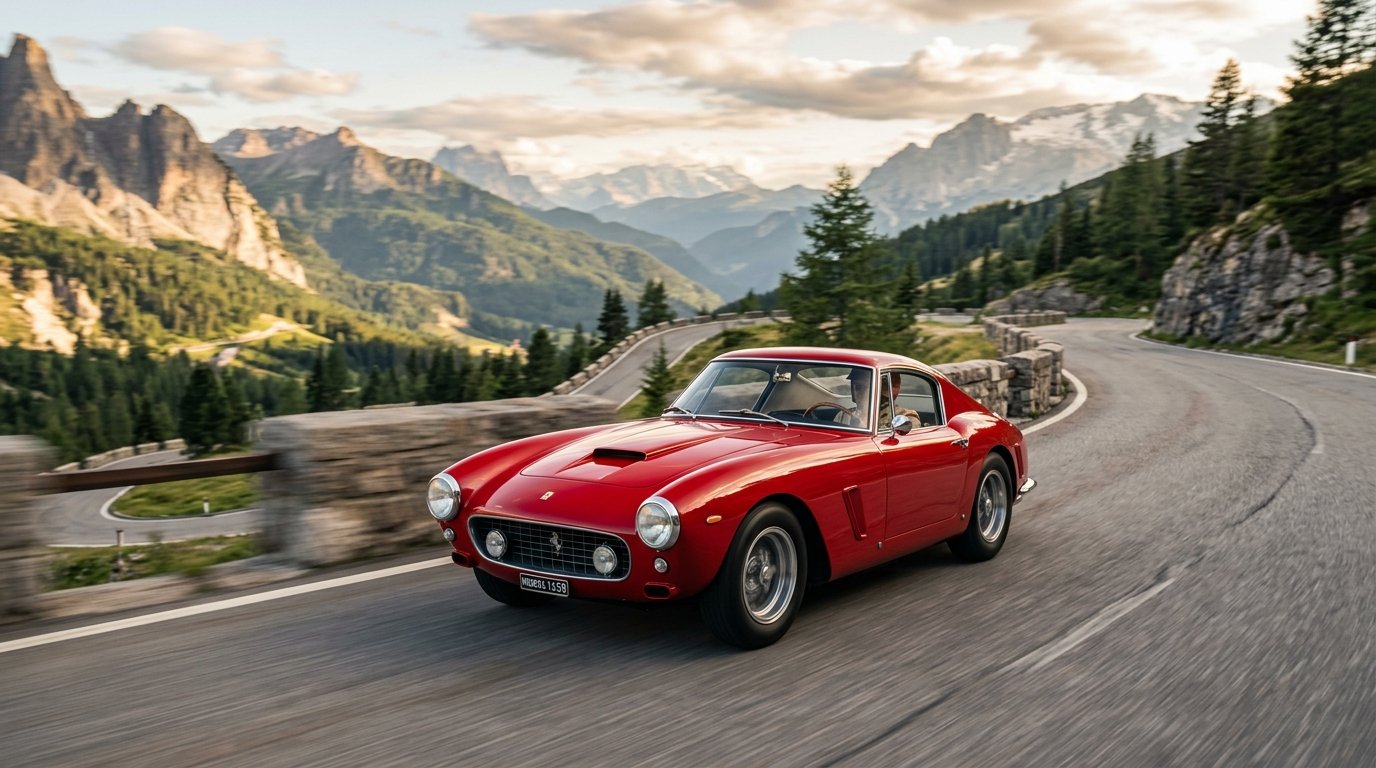
The SWB looks compact, purposeful and muscular without becoming visually aggressive.
That balance is one reason many enthusiasts consider it among the most beautiful Ferrari designs.
Pinin Farina Design and Scaglietti Construction
The body design is closely associated with Pinin Farina, while many bodies were constructed by Scaglietti.
The styling avoids unnecessary decoration.
The front is dominated by an oval grille.
Rounded fenders surround the wheels.
A relatively simple roofline flows into the rear body.
The design communicates speed without relying on dramatic wings, vents or oversized aerodynamic elements.
This restraint is central to the SWB’s enduring appeal.
Modern performance cars often communicate capability through aggressive styling.
The 250 GT SWB achieves the same effect through proportion.
Road Car or Racing Car?
One of the fascinating characteristics of the SWB is that both interpretations existed.
Ferrari produced more comfortable road versions intended for grand touring, while competition cars received lighter construction and more aggressive mechanical specifications.
This meant customers could experience essentially the same fundamental automobile in dramatically different forms.
Competition versions proved highly effective.
The car participated successfully in major international GT racing events during an era when Ferrari dominated many categories of sports-car competition.
Racing success strengthened the model’s reputation and created the foundation for its modern collector status.
What Does a 250 GT SWB Feel Like Mechanically?
The driving experience is fundamentally analog.
There are no electronic stability systems, adaptive driving modes or computer-controlled gearboxes.
The driver interacts directly with the steering, brakes, clutch, gearbox and engine.
The V12 responds strongly as engine speed increases, while the compact chassis allows the driver to place the car precisely.
However, driving a historic Ferrari quickly requires skill.
Braking distances, tire technology and suspension behavior differ dramatically from modern supercars.
The experience rewards mechanical understanding rather than electronic assistance.
Why Is the 250 GT SWB So Valuable?
Several factors come together.
First is the Ferrari name.
Second is the Colombo V12 engine.
Third is beautiful coachwork.
Fourth is genuine competition history.
Finally, production was limited enough that authentic examples remain extremely desirable.
Within the collector market, individual history is crucial.
A road car with uninterrupted ownership documentation may be extremely important.
A competition car with documented period racing history can occupy an entirely different level of significance.
Original engine and chassis components can also affect desirability.
Consequently, experts research each surviving Ferrari carefully.
The SWB’s Influence on Ferrari
The 250 GT SWB helped establish a formula that Ferrari continues to use.
A front-mounted high-performance engine, elegant two-seat or 2+2 proportions, strong racing connection and luxurious road capability became recurring themes across later Ferrari grand tourers.
The SWB also occupied an important evolutionary position within the legendary 250 family.
Cars from this family eventually became some of the most celebrated Ferraris ever constructed.
For enthusiasts studying how Ferrari evolved from a small racing manufacturer into one of the world’s most famous automotive brands, the 250 GT SWB is therefore essential.
It shows Ferrari at a moment when competition engineering, road-car usability and Italian design existed in remarkable balance.
FAQ
What does SWB mean on the Ferrari 250 GT?
SWB means Short Wheelbase, referring to the shortened chassis compared with earlier Ferrari 250 GT models.
What engine does the Ferrari 250 GT SWB use?
It uses an approximately 3.0-liter Colombo-designed V12 engine.
Was the Ferrari 250 GT SWB raced?
Yes. Competition versions achieved important results in international GT racing.